

Life at anchor can turn in an instant. That afternoon in Villefranche-sur-Mer, teamwork, calm heads, and one unlikely power tool kept us — and our boat — from catastrophe.
A Warning in Paradise
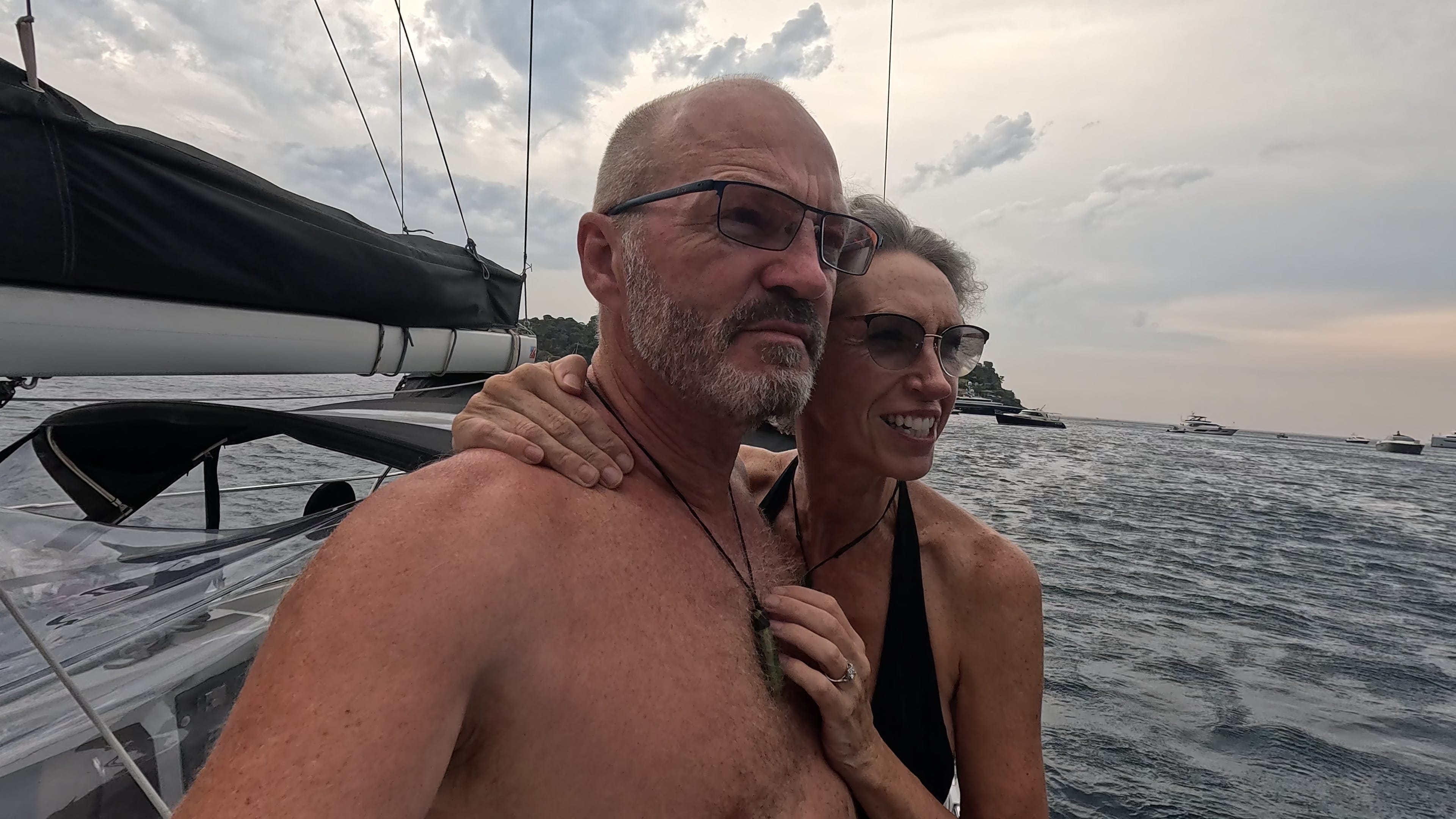
Living on the seas teaches you to respect the forces of nature; to stay alert and ready to respond to save your boat and your life at any time. One day in August in the idyllic bay of Villefranche-sur-Mer on the French Riviera, Richard and I stepped up as the perfect team to fight for our boat and our safety
.
We were enjoying breakfast in the cockpit on a delightful August morning when our Aussie friends passed and waved goodbye, telling us a storm may be coming in the afternoon and they were seeking a safer harbour. We couldn’t see it forecast, but we planned to investigate further.
That day we were going to make the one-train-stop trip to Nice to pick up a parcel that was waiting for us. It was our replacement anchor windlass motor, which had been faltering. It wasn’t far away and we would be back to the boat by early afternoon anyway.
On our dinghy ride to land, we met some friends, Helge and Marlene, in their dinghy. They also mentioned a possible storm. Storms are very difficult to predict and forecasts can be unreliable, but we are generally cautious and will take precautions anyway. Helge said that only one of the weather models was predicting it, Arome, which may have seemed unlikely — but Arome was the only model that predicted the catastrophic storms off Corsica in August 2022. That made us take it seriously.
We decided to change plans — ditch the train trip to Nice to get the windlass motor and instead have a quick walk around the delightful town, grab a coffee, and head back to prepare Helios for a storm. The storm was expected at 1700, should it even come at all.
Preparing for the Storm
We live at anchor all summer, held by our 20kg Spade anchor, which we call Don after Richard’s late dad. Don has kept us safe for three summers now, so we have faith that Don will look after us.
Richard dived to check and saw that the chain disappeared amongst Posidonia (seagrass) but couldn’t see Don, so figured it must be well buried. He did note the seabed was gravelly but didn’t think too much about it (mistake number one). He let out another 10 metres of chain for a total of 40 metres in seven metres of water depth.
We hoisted the dinghy onto the deck and secured it, deflated the kayak and stowed it below, removed the boom tent, and took all the cushions inside. We felt well prepared should a storm come and relaxed with a lovely late lunch.
Late in the afternoon, clouds started to gather and, as predicted, just before 1700 the wind picked up to about 20 knots and turned us 180 degrees from where we were set.
We watched blow-up pink flamingos go flying, dinghies attached to their boats lift out of the water like kites, and boom tents collapse. I have to admit we were a little smug as these boaters had brushed Helge off when he warned them of the coming storm.
Then boats started to drag. Superyachts blasted their loud horns at boats drifting towards them. Some sailing boats lifted anchor and battled the winds to reposition or just get out of the bay. We sat tight.
When the Anchor Fails
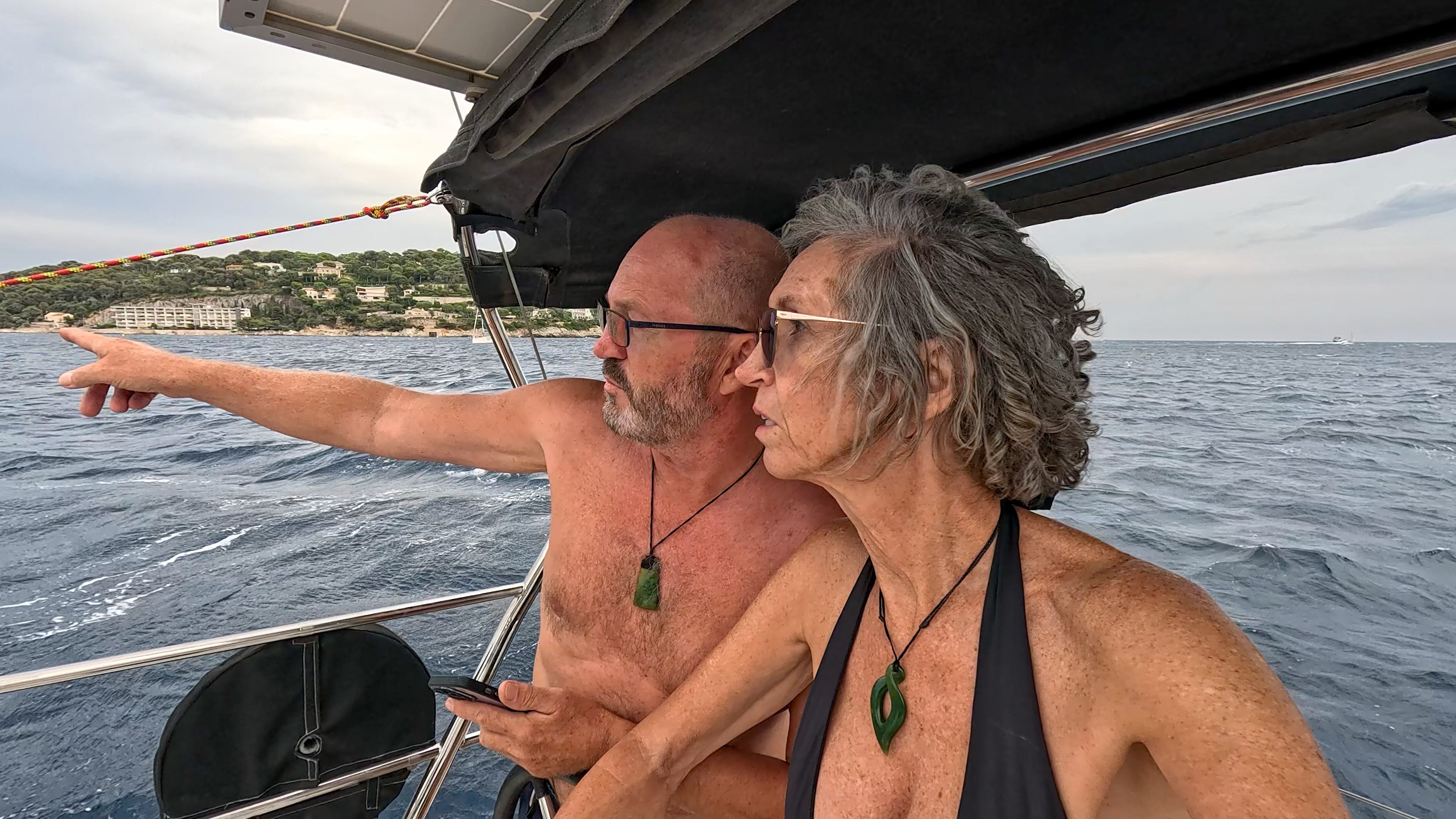
Then we realised we were dragging. Just slowly at first, so we weren’t sure, but when it was clear we had moved Richard sent me up to the bow to lift anchor while he drove forward into the wind.
By this stage, the gusts were hitting the predicted 45 knots, our bow was constantly getting blown off and it was difficult to reduce the load on the windlass by much.
The windlass motor struggled to lift the chain, hindered by the extra force of the wind. Even with Richard motoring forward it struggled. Remember we were picking up a new motor for the windlass? That’s because ours was starting to fail.
As we battled the conditions and the failing windlass motor for 20 minutes, we were slowly being forced back towards the rocks on the eastern side of the bay. The failing windlass motor tripped the breaker twice, then completely failed. At this point we still had 17 metres of chain out.
Fortunately, we had been blown into some deeper water, so our anchor was now just touching the bottom and Richard could drive forward and take us to the windward side of the bay.
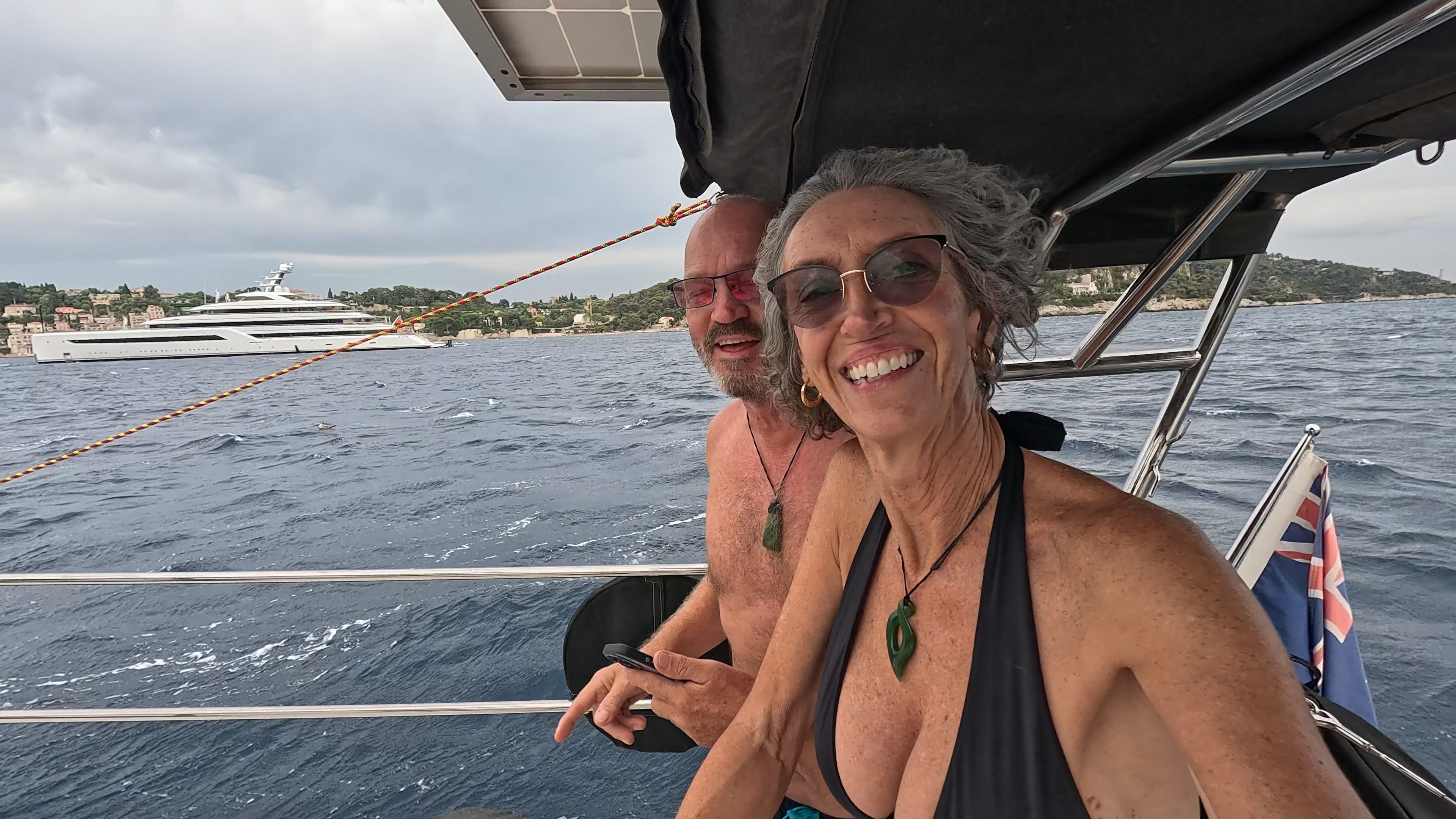
We had an anxious moment as we passed across the bow of a very large superyacht, hoping our anchor would clear their chain. Thankfully we got past.
The Moment of Truth
With nothing coming from the windlass motor, I figured we’d need to do a manual lift, so I asked Richard to do it. I have never done it, and in those difficult conditions, with lots of noise, wind and movement, I didn’t feel confident (I need to practise manual lifts).
We slowly manoeuvred Helios into a position in the bay where we were happy to try a manual lift. It’s surprisingly difficult to manoeuvre with 17 metres of chain and an anchor hanging off the bow. We were fighting the wind, which was pushing us back towards the eastern side of the bay.
At this point, we could have got out of the bay and dealt with the problem in clear water, but that would have meant fighting the problem in ever-increasing seas while being blown offshore. We chose to remain in the somewhat sheltered bay.
Richard attempted to engage the ratchet, which stops the chain from dropping, but it was stuck firmly in place. Most likely, salt crystals had locked it up (mistake number two – regularly check and service).
After a whack with a hammer and screwdriver, Richard was able to move the ratchet to its engaged position. He then undid the clutch, but the ratchet slipped, which led to the chain cascading down until it came to a crash – probably at the bottom of the sea.
We were in 50 metres of water at that point, and 58 metres of chain was out. We were still drifting towards the cliff face on the eastern shore, even though we were driving into the wind with full power, and with all of that chain out, our ability to control the boat was negligible. The cliff face was a couple of hundred metres away, putting us less than five minutes from foundering on the rocks.
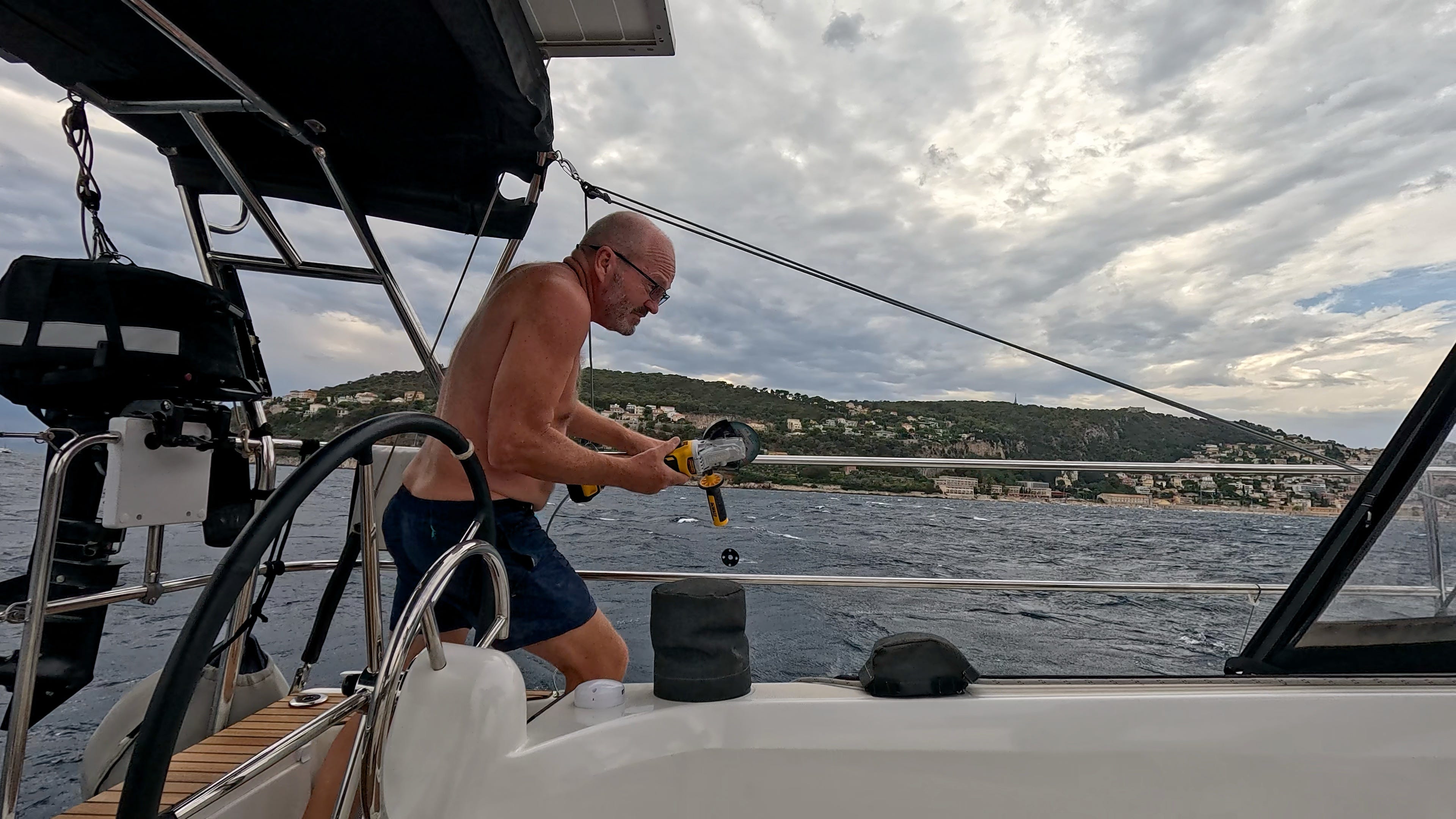
Richard came back to the helm and said the words I’d hoped he’d never say: “Get the angle grinder.”
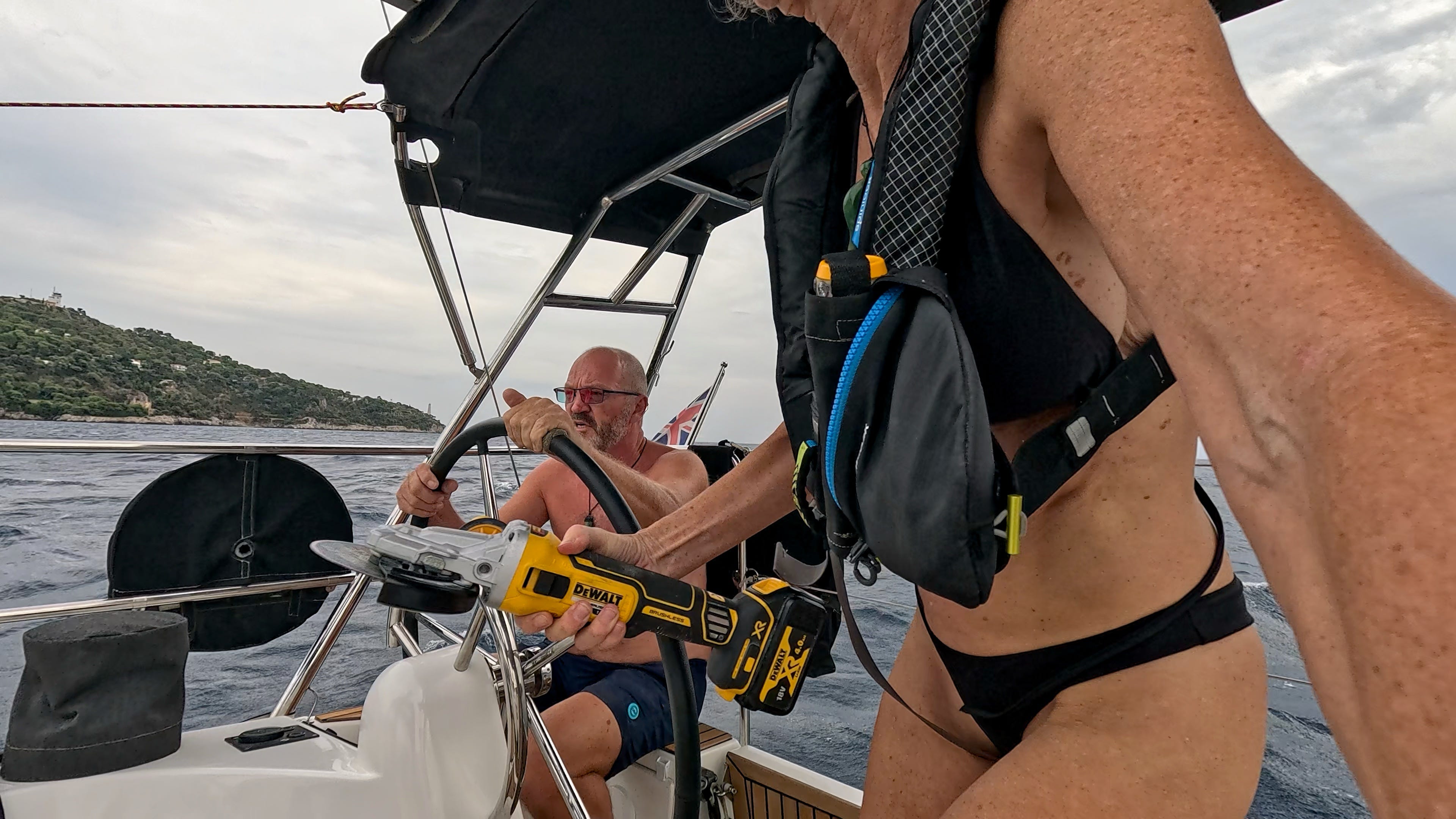
It’s always stored with a full battery and easily accessible just for situations like this. I ducked inside to retrieve it, handing over as we swapped the helm again. Within one minute he’d cut through the chain, dumping the chain and our reliable Don on the seabed.
We had immediate control of the boat and headed out to sea to wait for the storm to pass. Fortunately, Helge helped us get onto a mooring ball later that night so we were safe for the night until we could get a marina berth and sort out replacements.
Lessons from the Bay
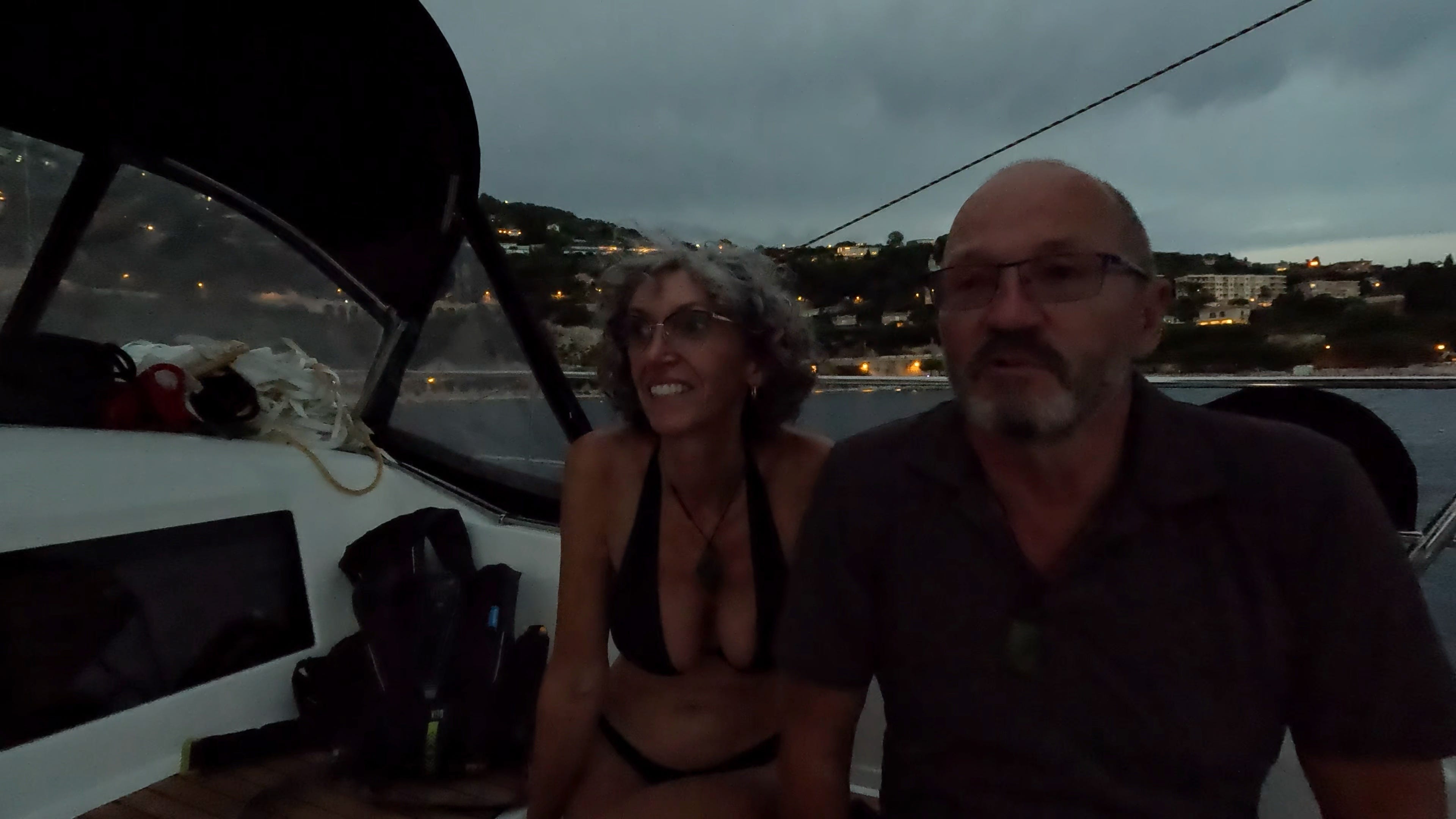
I’m pretty proud of us. We took a vague warning seriously and were well prepared. We remained calm and focused and made quick decisions to keep us safe. We keep emergency tools accessible and ready for use. Our communication was on point with clear information without emotion or panic. We can make hard decisions.
There are also some things we could have done better. We probably should have re-anchored to be sure we were in sand. We should check and practise anchoring manually – both of us. Richard does regular maintenance on the windlass, but not the ratchet mechanism. This needs to be added to the schedule, and of course, the regular practice of manual operation will help.
If we had re-anchored before the storm in a seabed we were sure of, then maybe this would not have happened. But our thoughts were that if we had a problem, then we would lift anchor and deal with it.
The subsequent failure of the windlass motor and then the windlass ratchet compounded the impact of the decision. As is typical, when big problems happen, it is normally the compounding of several smaller ones.
Know your anchor. We completely trusted our Spade anchor, but like all anchors, there will be sea bottoms where they perform better. A gravel/pebble bottom is probably the weakest area for the Spade, and when it is surrounded by seagrass, then the chances of resetting after a flip out are reduced. Sand is where it performs best, so we should have looked for this.
If you are not sure your ratchet is working well, don’t trust it and find solutions to lift your anchor another way. Rather than attempt a manual lift with the windlass, we could have tied a line to the chain and brought it back to a winch at the stern. With a 12-metre boat, it would only have taken two runs to winch up the 17 metres. If we’d done this rather than attempted to use the windlass for the manual lift, we would not have dropped 50 metres of chain.
Reflections at Anchor
Sailing reminds us that preparation and practice are vital, but so too are calm heads and teamwork when things go wrong. That day in Villefranche-sur-Mer could have ended very differently, but with an angle grinder, quick thinking, and trust in each other, Helios came out OK. The sea will always test us, and there’s not much room for error because the consequences can be huge.